By: Erin Bickford ’26
Reserve Record Editor-in-Chief
As Western Reserve Academy prepares to celebrate its Bicentennial, one poet has been chosen to capture the Pioneer spirit.
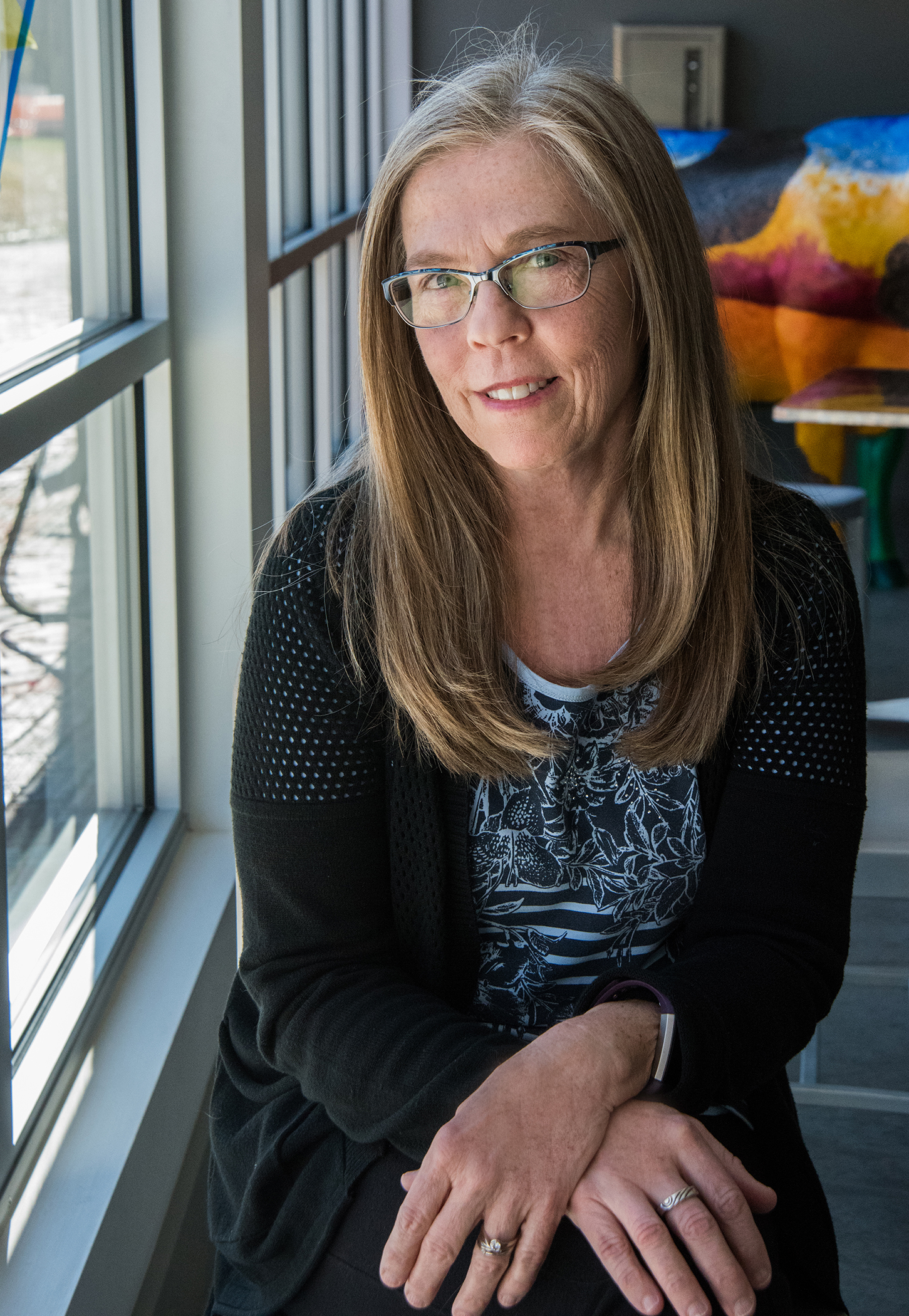
On February 17, Ohio Poet Laureate Emeritus Kari Gunter-Seymour visited Western Reserve Academy to observe the school in preparation for writing an honorary Bicentennial poem which will be unveiled at the school’s second inaugural literary festival in early April.
Hired by Mr. Zetzer, the English Department Chair, and the Bicentennial Poem Committee, Gunter-Seymour spent the day touring campus, hearing from students, and studying WRA’s history, all in an effort to capture the school’s spirit.
Gunter-Seymour explained that as students read the poem, she hopes “they’ll feel a little bit proud of the poem. Like they have some ownership in it and that it represents them.”
“Of course, I always hope that people will think ‘I kind of like poetry. I might read more poetry,’” she noted.
She also said that as she writes for WRA, she wants to make it relatable so that “anyone of any generation or age will find something that will move them” or that they might “learn something new about the institution.”
Yet her highly decorated career obscures a life that preceded poetry. Before the honors and acclaim—well before she was named the Ohio Poet Laureate—she was, by her own telling, a ninth-generation Appalachian woman living a “typical Appalachian story” in Meigs County, Ohio.
When her son was just three-years-old, she made a drastic change, moving into low-incoming housing in Athens, Ohio where she worked as a basket weaver. “I made a lot of money weaving authentic baskets, but I realized it was not enough to get out of low income housing.”
She decided to enroll at Ohio University, where she became a first-generation college student.
Initially, she wanted to study literature, but was worried she would not be able to make a living. After encouragement from an art professor, she began her major in graphic design.
She earned a Bachelor of Fine Arts in Graphic Design and later a Master of Arts in Commercial Photography.
While these may seem wildly different from poetry, Gunter-Seymour made the connection clear.
“If you think about what graphic design is, it’s about organizing information so people see what you want them to see first. And that’s a poem.”
She also explored photography, saying, “Photography is a moment in time; a poem.”
Additionally, she taught at Ohio University’s E.W. Scripps School of Journalism, and said, “Journalism teaches us you need to find the perfect words; a poem.”
Her turn to poetry came as a coping mechanism when her son joined the military during the Iraq War.
“I was having trouble just being,” Gunter-Seymour explained. “It was constantly in my mind, ‘is he okay?’”
After rarely talking to him and trouble sleeping, she needed a way to heal.
“I started to journal, to try to free my mind a little bit, because I was literally making myself crazy.” She noted that poetry gave her faith that her son would come home.
She began writing opinion editorials in her local newspaper to protest the war, and kept poetry as a personal cleansing ritual.
She said that when she finally began to publish her poetry, she “realized I've got to write about my people. Because people think about Appalachians, and they think everybody's overweight, undereducated, and undergroomed.”
Since then, Kari Gunter-Seymour has become an advocate for Appalachian communities, founding the Women of Appalachia Project, and writing numerous commission pieces on the resilience of various Appalachian towns.
She also addresses racism, sexism, and LGBTQ rights in her poems, all in an effort to educate people and break down the barriers used to exclude certain demographics.
She noted that while it might sound corny, “my son gave so much to serve this country, and I want to serve as I can, to break down some of those barriers.”
Gunter-Seymour said that she admires the way that WRA is leaning into the “old ways,” centered around community, and the mindset that “life is more than just about me.”
She stated that the way WRA teaches students their worth and offers constant support is a model all educational institutions should follow, and a testament to this school’s spirit.
She noted that the positivity of the student body is something rare that she is hoping to capture in her poem.
Kari Gunter-Seymour will be back this April as a visitor for the second annual Word Count Literary Festival where she will read the Bicentennial poem.


.jpg&command_2=resize&height_2=85 "Time Marches On: 2026 Moving Up Ceremony Celebrates Another Outstanding School Year")





.jpeg&command_2=resize&height_2=85 "Western Reserve Academy Announces 2026 Commencement Speaker")